
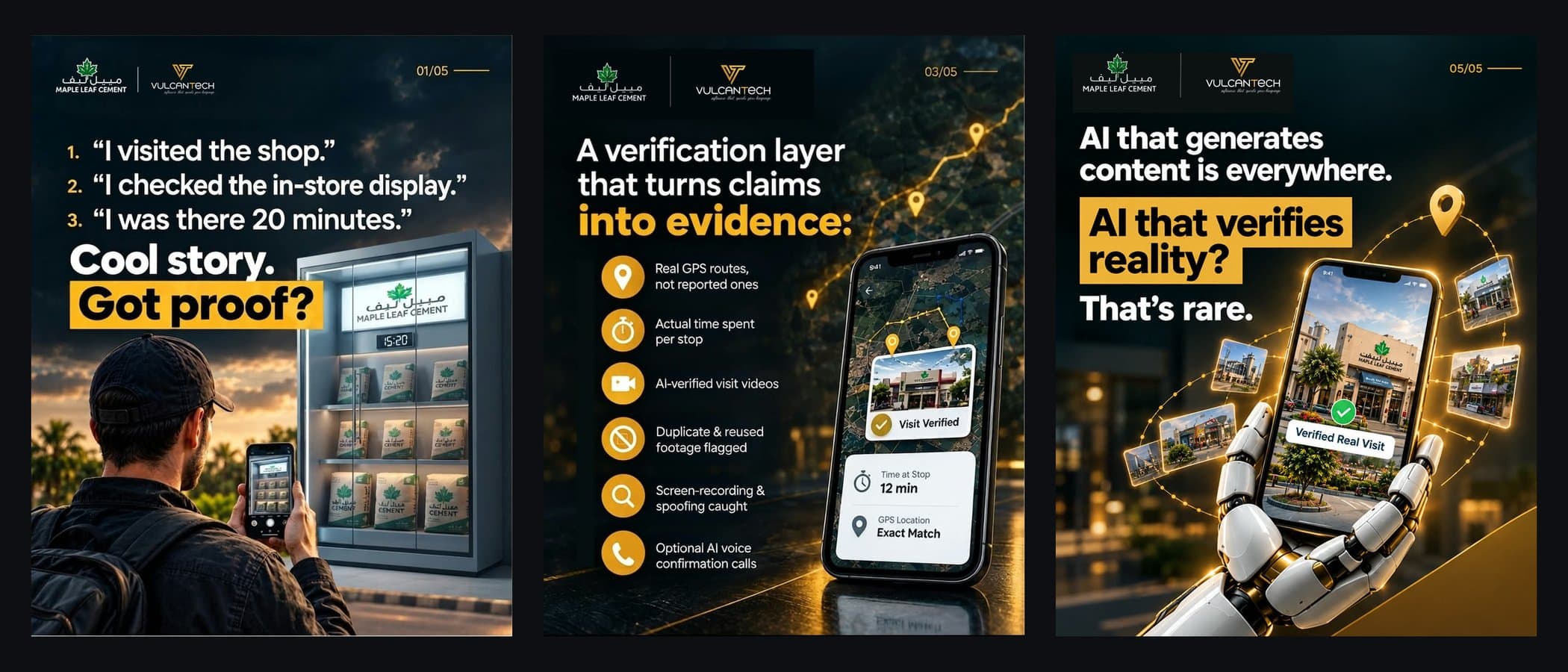
AI field agent verification uses GPS route data, computer vision and digital evidence checks to confirm that a field visit really happened, where it happened and how long it lasted, instead of relying on what an agent reports afterwards. For cement manufacturers and other heavy-industry companies with large sales and merchandising teams on the road, it replaces "trust me" reporting with evidence management can review.
Key takeaways
Manual field reports are hard to verify once a team grows beyond a handful of agents.
GPS routes and dwell-time tracking show where agents went and how long they stayed at each shop.
Computer vision can validate shop and billboard footage, read on-site text with OCR and flag duplicate, reused or screen-captured media.
The goal is not closer surveillance: it is field work that is measurable, so fraud gets harder and decisions rest on data.
Why field reporting breaks down in heavy industry
Cement is sold through a wide network of dealers, retailers and building-material shops, and much of the market-facing work happens far from head office. Field agents visit shops, check in-store displays, confirm billboard placements and report back. The commercial picture management sees (which outlets were covered, what stock and branding was on display, which campaigns are live) is assembled from those reports.
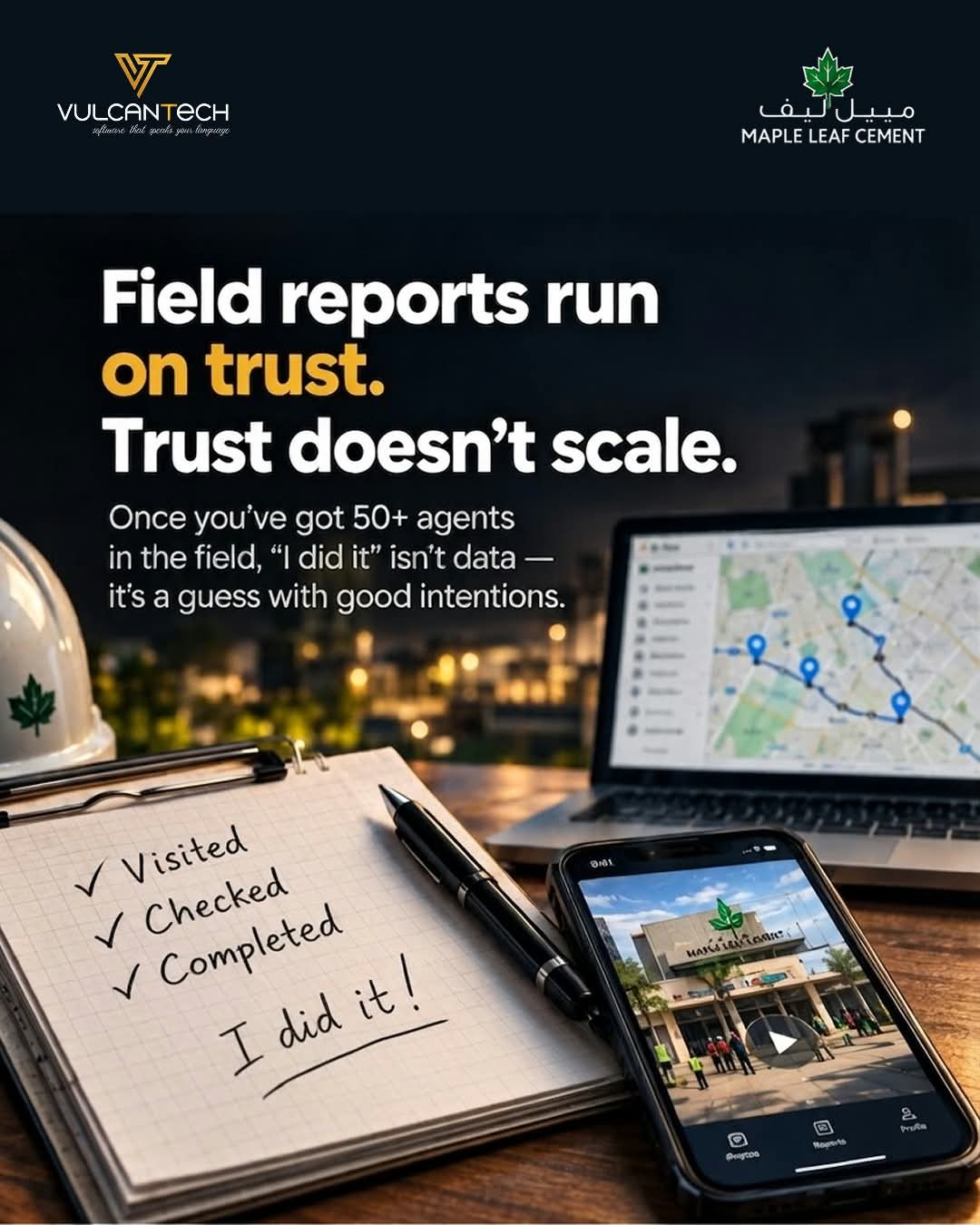
The trouble is that most of those reports are claims. "I visited the shop." "I checked the display." "I was there twenty minutes." With a small team, a manager can sense-check them. Once there are dozens of agents across several regions, a checklist ticked on a phone or a notebook is not data. It is a guess with good intentions.

The core business challenges
When VulcanTech worked with Maple Leaf Cement on its field operations, four problems stood out. They are common to almost any company that relies on remote field teams.
Unverified visits. It is difficult to prove that an agent actually visited an assigned location, rather than reporting the visit from somewhere else.
No route or dwell-time visibility. Managers have limited insight into the routes agents take, which shops they stop at and how long they spend at each one.
Slow, error-prone manual reports. Reports typed up after the fact take time to compile and review, and mistakes slip through.
Reused or fake media. Photo and video "evidence" can be reused from an earlier visit, shared between agents, or recorded from another screen instead of captured live on site.
How the AI field agent verification platform works
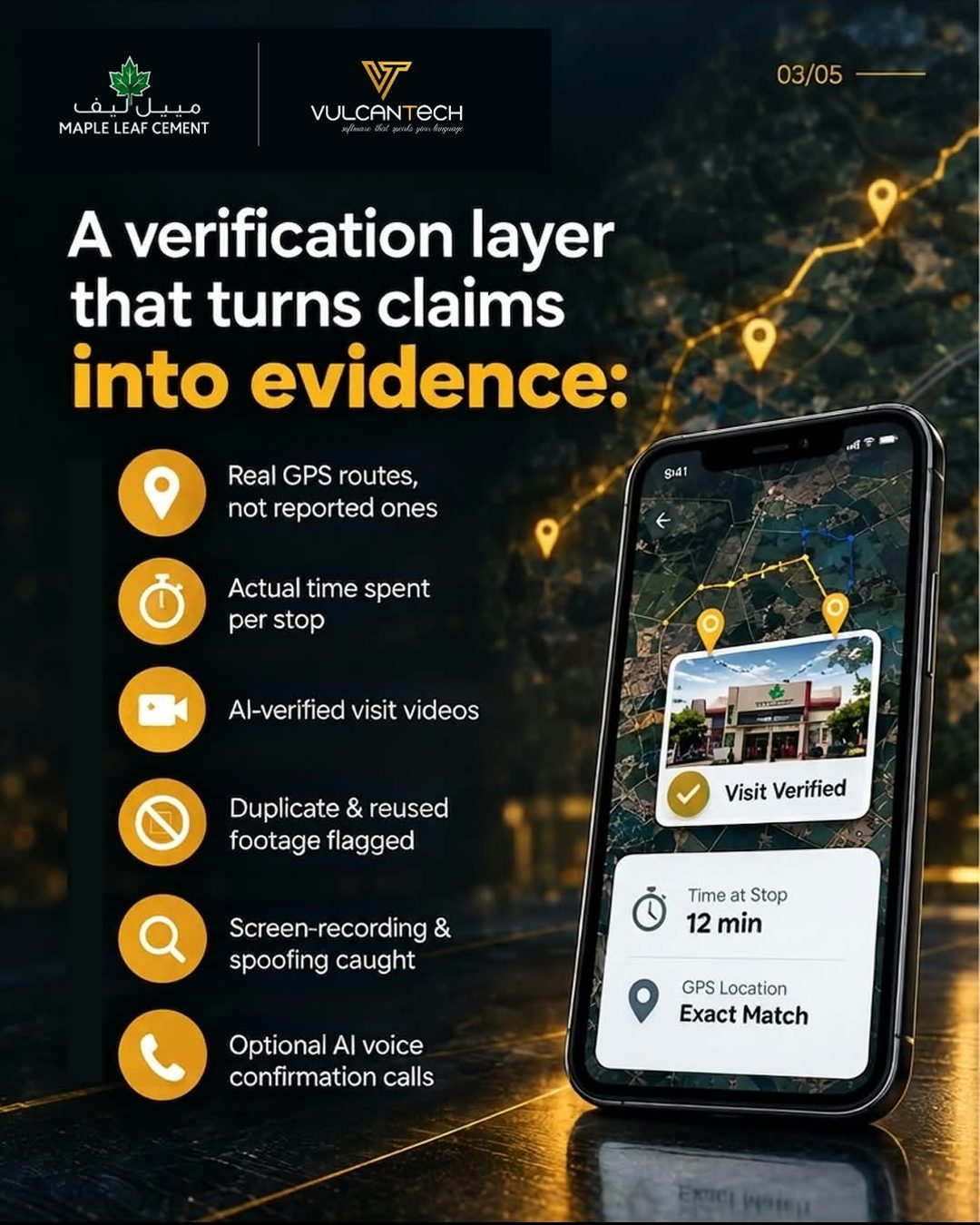
VulcanTech built and delivered an AI-powered field agent verification platform for Maple Leaf Cement: a verification layer that turns claims into evidence. Each capability answers one of the questions a manager would otherwise have to take on faith.
Route and dwell-time tracking
Agent routes are plotted on a map from real GPS data, not reported locations, and the platform calculates the time spent at each visited shop. Route and dwell-time tracking gives managers an objective view of coverage and of how field time is actually used.
AI video and billboard verification
Agents capture short videos at retailers and billboard sites. Using the Google Vision and Google Gemini APIs, the platform analyses the footage and validates the visible content (the shop, the display, the billboard) as field evidence. This is AI video verification for retail audits: the footage itself is checked, not just the fact that a file was uploaded.
Duplicate video and cross-agent reuse detection
Video similarity detection flags identical or near-identical submissions, including the same footage submitted by different agents. Visit history validation compares new evidence with previous submissions within a defined recency period, so last month's video cannot quietly stand in for today's visit.
Anti-spoofing technology
Anti-spoofing field tracking detects media that was captured from another screen, such as a phone recording a laptop playing an old video, rather than genuine live field activity.
OCR and content extraction
Optical character recognition reads text on billboards and in images, such as brand names and campaign messages, and uses it to support evidence validation.
Optional AI voice confirmations
As an optional extension, AI voice calls (via VAPI or Twilio) can automate visit confirmations, notifications and reminders.
From manual reports to AI-verified insights
The difference is easiest to see side by side.
| Area | Before: manual reporting | After: AI-verified field operations |
|---|---|---|
| Visits | Self-reported, hard to prove | Confirmed against GPS location and on-site footage |
| Routes and time | Limited visibility | Routes on a map with dwell time per shop |
| Evidence | Photos and videos taken at face value | Checked for duplicates, cross-agent reuse and screen capture |
| Review | Slow manual checking of reports | AI-assisted verification with flagged exceptions |
| Decisions | Based on gut feeling | Based on structured operational intelligence |
The business value of verified field work
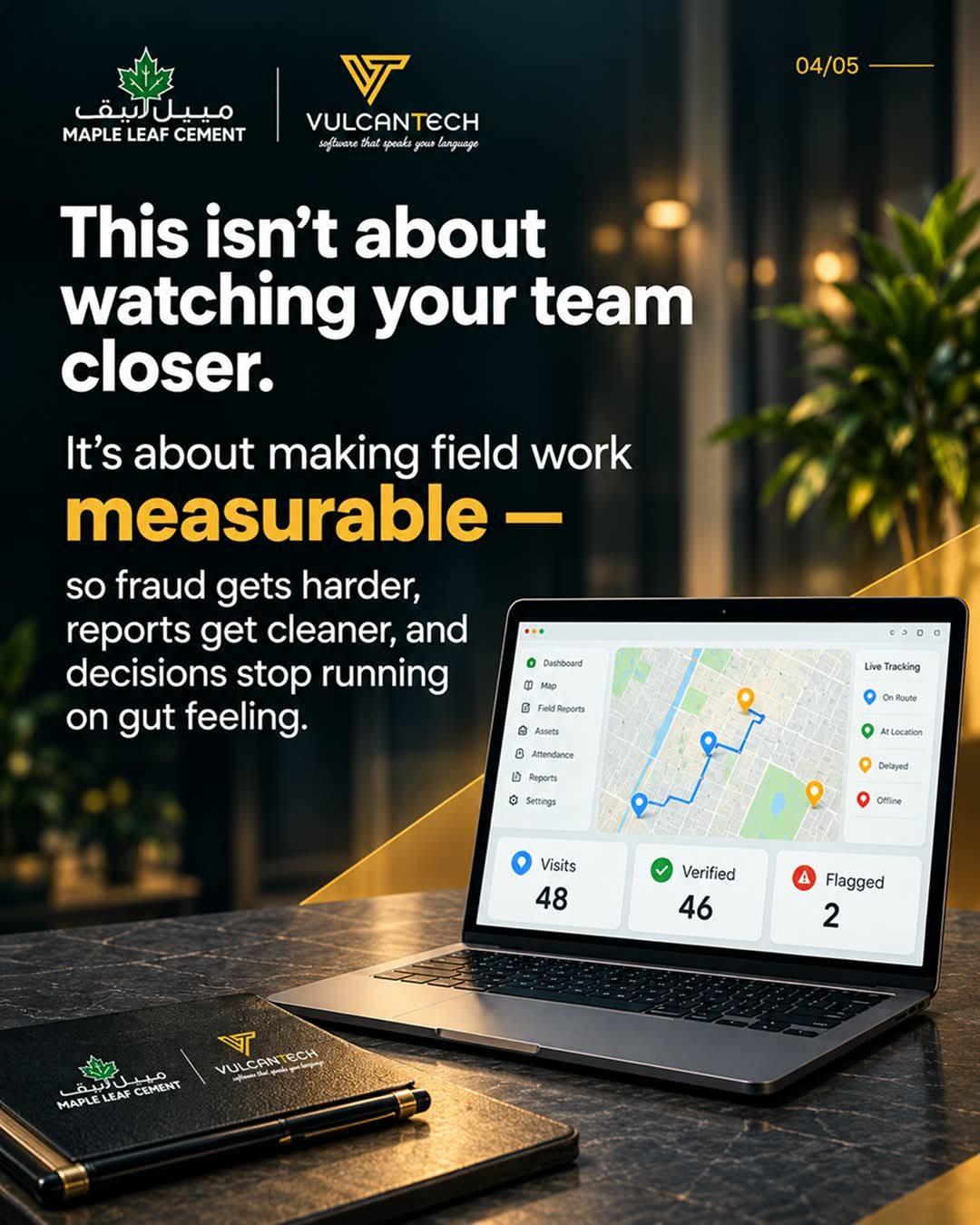
Field force automation is often presented as a monitoring tool. The real value is different: it makes field work measurable.
Accountability. Verifiable evidence for every visit means good work is visible and claims can be checked.
Fraud controls. Duplicate detection, cross-agent reuse checks and anti-spoofing make fabricated visits much harder to pass off.
Management visibility. Leaders see field movement, coverage and visits without chasing reports.
Faster review. AI-assisted verification lets reviewers focus on flagged exceptions instead of every submission.
Operational intelligence. Structured, verified field data supports better decisions on coverage, campaigns and team performance.
The technology behind it
The platform combines AI and computer vision, OCR, GPS and mapping (Google Maps API), video similarity detection and anti-spoofing, built on the Google Vision and Google Gemini APIs, with optional voice automation through VAPI or Twilio. VulcanTech's computer vision and custom AI agent teams built these components around Maple Leaf Cement's field teams and reporting workflow.
What this means for cement industry digital transformation
Most AI in the news generates content. AI that verifies reality is rarer and, for operations leaders, often more valuable. For cement manufacturers, construction-material suppliers and any business with a large field force, verified field data is a practical first step in digital transformation: it fixes the quality of the information every later decision depends on.

Read the Maple Leaf Cement customer story for the full project, or see how we approach manufacturing and industrial projects.
Modernise your field verification
If your field reports still run on trust, VulcanTech can help you design a verification layer that fits your teams, your apps and your markets. Book a free 30-minute discovery session and we will map where verification would make the biggest difference to your field operations.